
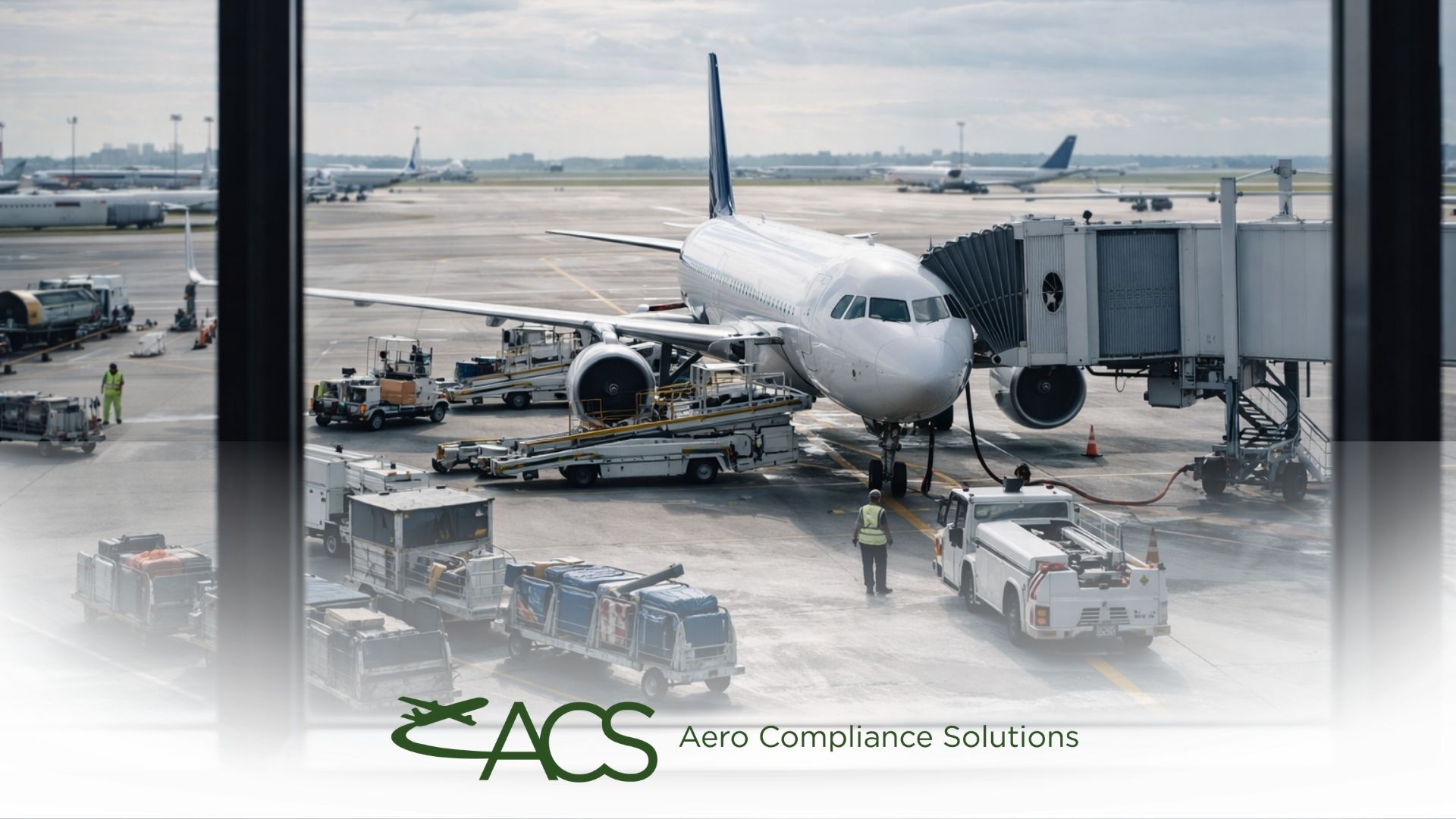
Part-IS Internal and External Reporting
Aviation organisations operating under EASA regulations are facing one of the most significant compliance shifts in recent years. EASA Part-IS, introduced through Implementing Regulation (EU) 2023/203, requires organisations to implement a formal Information Security Management System and to meet specific reporting obligations under IS.I.OR.215, IS.I.OR.230, IS.D.OR.215, and IS.D.OR.230.
For many organisations, the technical side of Part-IS gets the most attention. Reporting, however, is where gaps most commonly appear during audits. Whether you are an AOC holder, a CAMO, a Part-145 maintenance organisation, or an ANSP, understanding exactly what your reporting obligations are and how to meet them is no longer optional.
This guide breaks down the internal and external reporting requirements under Part-IS, explains what compliance looks like in practice, and outlines a structured approach to building a reporting process that holds up under regulatory scrutiny.
What Are Part-IS Reporting Requirements?
Part-IS establishes two layers of reporting that organisations must manage. The first is internal reporting, which governs how information security events, risks, and incidents are captured, assessed, and escalated within the organisation. The second is external reporting, which covers how and when organisations must notify their competent authority about information security incidents that could impact aviation safety.
IS.I.OR.215 and IS.D.OR.215 define the requirements for organisations to establish processes for identifying, recording, and acting on information security events that have a potential safety impact. IS.I.OR.230 and IS.D.OR.230 expand on this by establishing the obligations around reporting those events externally to the relevant national authority.
The distinction matters. Internal reporting is about operational awareness and risk management. External reporting is about transparency with your regulator and demonstrating that your ISMS is functioning as intended.

Why Reporting Failures Happen
Most reporting failures are not caused by a lack of intent. They happen because organisations do not have clearly defined processes in place before an incident occurs. When an information security event happens, teams are often unclear on what qualifies as a reportable event, who is responsible for documenting it, what the escalation path looks like, and how quickly an external report must be submitted.
Part-IS does not allow for ambiguity here. If your organisation cannot demonstrate a functioning reporting process during an audit, that gap becomes a finding. Repeated findings or a failure to report a safety-impacting event can lead to regulatory action and, in serious cases, restrictions on operational activities.
The good news is that building a compliant reporting process is achievable with the right structure in place.

How to Build a Compliant Part-IS Reporting Framework
Start with a Gap Analysis
Before you can build a reporting framework, you need to understand what your current processes look like and where they fall short. A structured gap analysis maps your existing workflows against Part-IS requirements, identifies roles and responsibilities that are undefined, and highlights any weaknesses in how information security events are currently captured.
If you have not yet completed a formal gap analysis against Part-IS, this is the foundation everything else depends on. The ACS compliance services include gap analysis as a core component of both the Core and Pro packages, giving organisations a clear starting point.
Define What Constitutes a Reportable Event
One of the most common sources of confusion is the question of what actually triggers a reporting obligation. Not every IT issue is a reportable information security event under Part-IS. The regulation requires organisations to report events that have, or could have, an impact on aviation safety.
Your ISMS documentation must include clear criteria that help staff at every level make this determination quickly and consistently. This includes defining thresholds for internal escalation and the conditions under which an external report to the competent authority is required.
Standardise Your Reporting Templates and Processes
Consistency is critical. Once you have defined what constitutes a reportable event, your organisation needs standardised templates for capturing and documenting incidents. These templates should record the nature of the event, the systems or functional chains affected, the potential safety impact, the immediate actions taken, and the timeline of the response.
External reports submitted to your competent authority must also follow a defined format and timeline. Building this into your ISMS documentation removes the risk of ad hoc reporting that is difficult to audit or defend.
Assign Clear Accountability
Reporting processes fail when no single person owns them. Part-IS requires organisations to assign accountability for information security within the organisation, and this should extend directly to the reporting function. Whoever holds responsibility for ISMS oversight should have clear authority to initiate both internal escalation and external reporting.
This does not mean one person handles everything. It means your process defines who does what, in what order, and within what timeframe.
Leverage Technology to Support Reporting
Manual reporting processes are prone to delays and errors, particularly in organisations where information security sits alongside other operational responsibilities. Aviation-specific tools that automate event detection, generate structured reports, and maintain an auditable record of all reporting activity significantly reduce the burden on your team.
The ACS AeroScan tool was built specifically to support this. It scans your IT infrastructure, identifies vulnerabilities, generates actionable reports, and provides the kind of continuous monitoring that makes Part-IS reporting processes sustainable beyond the initial compliance deadline.
Train Your People
Reporting is only as effective as the people responsible for it. Regular training ensures that staff across your organisation understand what Part-IS requires, how to identify a potential information security event, and what steps to take when one occurs. Training should not be a one-time exercise. It should be part of your ongoing ISMS operation and reflected in your competence records.
Build in Continuous Improvement
Part-IS compliance is not a point-in-time achievement. Your reporting processes should be subject to regular review, internal audit, and improvement based on real-world experience. If a report was submitted late, that is a process failure worth examining. If an event was initially categorised incorrectly, your criteria need to be reviewed.
Continuous improvement is what separates organisations that maintain compliance from those that pass an audit once and drift back into non-compliance.
The Consequences of Getting It Wrong
Organisations that do not have functioning reporting processes are exposed on two fronts. The first is regulatory: auditors will identify gaps, issue findings, and potentially escalate if the same issues appear repeatedly. The second is operational: without effective internal reporting, information security risks go unmanaged, and the potential for a safety-impacting incident increases.
The February 2026 compliance deadline for operators has now passed. Organisations that are still working toward full compliance should be treating reporting process development as an urgent priority, not a background task.

A Strategic Advantage, Not Just a Regulatory Burden
Aviation organisations that build robust Part-IS reporting frameworks do more than satisfy a regulatory requirement. They create an internal culture of information security awareness, improve their ability to detect and respond to threats before they escalate, and demonstrate to their competent authority that their ISMS is operating as designed.
When reporting is embedded into daily operations rather than treated as a box-ticking exercise, organisations are better positioned to make informed decisions, maintain stakeholder trust, and operate with confidence in an increasingly complex threat environment.
If your organisation needs support building or reviewing its Part-IS reporting processes, the team at Aero Compliance Solutions is ready to help. Contact us today to discuss where you are in your compliance journey and what a practical path forward looks like.
An Information Security Management System (ISMS) is a structured framework that helps aviation organisations protect their information, systems, digital assets, and operational data from security threats. It ensures confidentiality, integrity, and availability of critical information through policies, risk management, processes, monitoring, and continuous improvement.
Traditional safety procedures or checklists are often reactive and task-based (e.g., “did we complete the checklist?”). An SMS is proactive and systemic: it embeds hazard identification, risk management, safety assurance and continuous improvement in organisational culture and processes. It moves beyond procedural compliance to performance-based monitoring and improvement. In other words, it provides “control & oversight”, “stability & security” and constant attention to emerging threats.
Aviation operations are inherently complex and high-risk. An SMS ensures that safety is integral, not an add-on. By having formal processes to capture hazards, perform risk assessments, trigger corrective and preventive actions, and monitor performance, organisations can reduce incidents, improve operational resilience, and maintain regulatory compliance. ACS emphasises that newer regulations such as EASA Part‑IS require integration of information security frameworks with SMS frameworks – showing that safety and security are now tightly interconnected.
A Safety Management System (SMS) is a structured, organisation-wide approach to managing safety risks. In aviation organisations it provides the framework to identify hazards, assess and mitigate risks, monitor performance, and continually improve safety outcomes. An SMS brings together policies, procedures, roles & responsibilities, reporting systems, risk management and assurance activities.
Aero Compliance Solutions specialises in helping aviation organisations meet EASA Part-IS requirements.
Their services typically include:
- Gap analysis
- Information-security risk assessments
- Policy and procedure development
- Integration of ISMS with existing SMS
- Supplier chain and interface control mapping
- Incident-response planning
- Compliance monitoring
Their structured aviation-specific approach ensures organisations achieve compliance and real-world resilience.
Yes, for many organisations.
Under EASA Part-IS, the following entities must implement an ISMS aligned to aviation requirements:
- Air operators (AOC holders)
- CAMOs
- Ground handling service providers
- Aerodromes
- ANSPs
- Continuing airworthiness entities
Even outside EASA states, many regulators follow ICAO guidance to strengthen cyber resilience.
Aviation is highly dependent on digital systems – flight operations, maintenance, navigation, crew management, dispatch, and communication platforms. A cyberattack or data breach can disrupt flight safety, ground operations, or regulatory compliance.
EASA Part-IS now mandates that operators, airlines, CAMOs, ground handlers, and ANSPs have a formal ISMS in place to manage information-security risks in an integrated, systematic way.
EASA stands for the European Union Aviation Safety Agency. It is the regulatory authority responsible for civil aviation safety across Europe, setting rules, standards, and guidelines for airlines, maintenance organizations, and aviation service providers. EASA oversees compliance with regulations such as Part-IS, ensures Safety Management Systems (SMS) are in place, and provides certification for aviation organizations to maintain safe and secure operations.
Part-IS refers to the EASA (European Union Aviation Safety Agency) regulation for Information Systems and Safety Management in aviation organizations. It is part of EASA’s compliance framework, ensuring aviation companies have proper Information Security Management Systems (ISMS) and Safety Management Systems (SMS) in place to protect operations, data, and safety-critical processes.
Read the complete guide on Part-IS for aviation organizations
Aviation cybersecurity is the practice of protecting aviation systems, data, and communications from cyber threats. It ensures compliance with EASA Part-IS and secures safety management systems (SMS).
A cyber attack is any attempt to gain unauthorized access, steal data, or disrupt digital systems. In aviation, these can compromise ISMS, SMS, and operational safety.
A supply chain attack targets vulnerabilities in third-party vendors or partners to access an organization’s systems. Aviation operators must secure their suppliers to maintain safety and compliance.
Ransomware is malware that encrypts files or systems and demands a ransom for access. In aviation, ransomware can disrupt operations and compromise safety-critical data.
The European Union Aviation Safety Agency (EASA) is the regulatory authority responsible for civil aviation safety in Europe. EASA develops regulations, monitors compliance, and issues certifications, including standards for cybersecurity and Part-IS.
MFA stands for Multi-Factor Authentication. It requires users to provide two or more verification factors to access a system, such as a password and a code sent to a mobile device. MFA is crucial for aviation cybersecurity.
Contact Aero Compliance Solutions to discuss your business requirements.
Table Of Contents
- Part-IS Internal and External Reporting
- What Are Part-IS Reporting Requirements?
- Why Reporting Failures Happen
- How to Build a Compliant Part-IS Reporting Framework
- The Consequences of Getting It Wrong
- A Strategic Advantage, Not Just a Regulatory Burden
- What Is ISMS
- How does SMS differ from usual safety procedures or checklist culture?
- Why is an SMS important for aviation organisations?
- What is a Safety Management System (SMS)
- How can Aero Compliance Solutions help with ISMS implementation?
- Is an ISMS required by aviation regulators?
- Why is an ISMS important in the aviation industry?
- What is EASA?
- What is Part-IS?
- What is aviation cybersecurity?
- What is a cyber attack?
- What is a supply chain attack?
- What is ransomware?
- Who is / what is the European Union Aviation Safety Agency (EASA)?
- What is MFA?