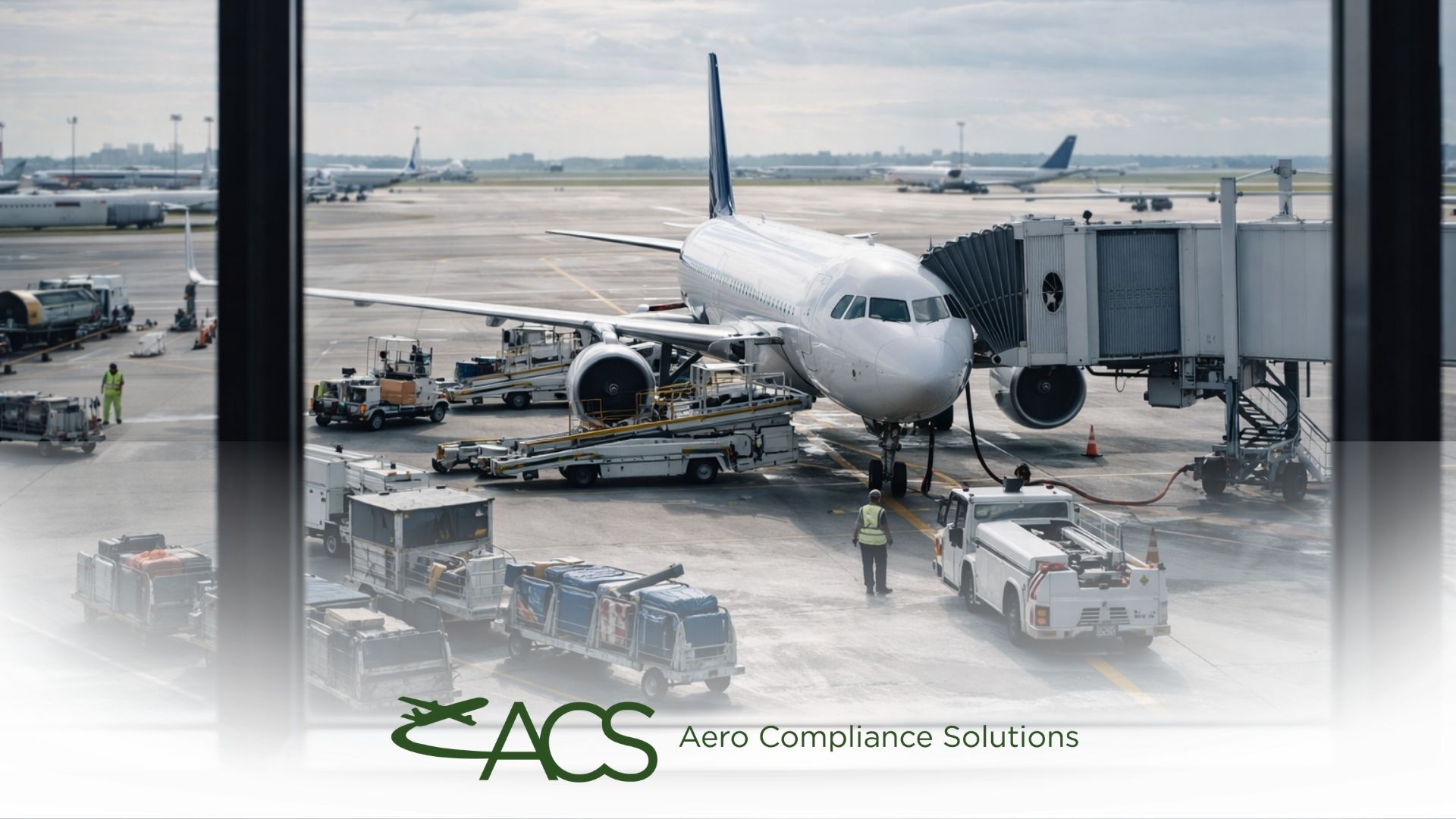

EASA Part-IS Compliance for Aviation Companies
The introduction of EASA Part-IS compliance requirements has created new cybersecurity responsibilities for aviation organisations across Europe and beyond. Airlines, maintenance organisations, airports, and aviation service providers must now implement structured cybersecurity management systems to protect operational and safety-critical infrastructure.
The regulation forms part of the broader European aviation safety framework overseen by the European Union Aviation Safety Agency (EASA). You can read more about the regulatory body on the official EASA website.
While the objective of the regulation is clear, many aviation organisations are finding it challenging to implement the required cybersecurity systems. Common difficulties include high implementation costs, a shortage of cybersecurity expertise, and the challenge of integrating new security processes into established aviation operations. This is where Aero Compliance Solutions can provide practical support.
The company specialises in helping aviation organisations achieve EASA Part-IS compliance by combining aviation regulatory knowledge with practical cybersecurity tools and implementation support. Their approach focuses on building working security systems rather than simply producing documentation. You can learn more about their services here.
Below are three major challenges aviation organisations face when implementing Part-IS and how Aero Compliance Solutions helps address them.
1. Reducing the Cost and Complexity of EASA Part-IS Compliance
One of the biggest barriers to EASA Part-IS compliance is the cost of implementing cybersecurity programs. Many small and medium sized aviation organisations do not have internal cybersecurity teams or the budget for enterprise security monitoring systems.
Aero Compliance Solutions addresses this problem by providing structured tools and support that simplify compliance implementation.
Their main platform, ACS AeroScan, is a cloud based cybersecurity scanning system that automatically analyses company networks and systems for vulnerabilities. The platform generates clear reports highlighting cybersecurity risks and recommended actions.
This allows aviation organisations to quickly understand their cybersecurity posture without purchasing expensive monitoring infrastructure.
In addition, the company offers compliance support packages that include aviation specific templates such as:
- cybersecurity policies
- risk assessments
- incident response procedures
- staff training documentation
These materials are designed specifically for aviation organisations and scaled to suit small and medium sized companies, aligning with the proportionality principle encouraged by EASA guidance.
Aero Compliance Solutions also performs Part-IS gap analyses, which provide a clear overview of where an organisation currently stands in relation to the regulation.
This helps companies focus only on the improvements required for compliance, saving both time and resources

2. Integrating Aviation Cybersecurity Into Daily Operations
Another concern for aviation organisations is the risk that cybersecurity controls may interfere with daily operations.
Aircraft maintenance, flight operations, and airport services rely on efficient workflows. Poorly implemented security procedures can slow down operational tasks if they are not integrated properly.
Aero Compliance Solutions helps organisations integrate cybersecurity processes into their existing Safety Management Systems (SMS) and operational frameworks. Safety Management Systems are already a core requirement in aviation safety regulation. More information about aviation SMS frameworks can be found through the International Civil Aviation Organization (ICAO).
By linking cybersecurity processes with these existing systems, organisations can implement security controls without creating separate administrative processes. The AeroScan platform runs in the background and provides clear action lists without interrupting operational activities.The company also provides cybersecurity awareness training designed specifically for aviation personnel, including pilots, engineers, managers, and operational staff. This helps bridge the gap between IT teams and operational departments by demonstrating how cyber threats can affect aviation safety.
Consultants guide organisations through practical improvements such as access control policies, monitoring systems, and reporting procedures. This approach allows aviation companies to move toward EASA Part-IS compliance without disrupting essential operational workflows.
3. Preparing Aviation Organisations for Regulatory Audits
Although regulatory enforcement of EASA Part-IS compliance is still evolving, aviation authorities are expected to increase cybersecurity oversight in the coming years.
Eventually, authorities will require clear evidence that cybersecurity systems are functioning effectively. This may include monitoring logs, vulnerability testing results, incident records, and documented corrective actions. Aero Compliance Solutions helps aviation organisations prepare for these regulatory inspections before they occur. The company provides independent compliance audits and cybersecurity assessments to identify weaknesses early.
The AeroScan platform also produces continuous compliance evidence including:
- monthly cybersecurity reports
- vulnerability scan results
- incident logs
- documented corrective actions
These records provide verifiable proof that cybersecurity monitoring and improvement processes are active. The company also assists organisations with building long term cybersecurity capabilities such as:
- continuous cybersecurity monitoring
- incident response processes
- supplier and third party cybersecurity checks
This turns cybersecurity compliance from a documentation exercise into an operational security management system that can stand up to regulatory inspections.
Strengthening Aviation Cybersecurity for the Future
Meeting EASA Part-IS compliance requirements requires more than preparing documentation for regulators. Aviation organisations must demonstrate that cybersecurity risks are continuously monitored and actively managed. Aero Compliance Solutions acts as a specialist partner for aviation organisations navigating this new regulatory environment. By combining aviation regulatory expertise with practical cybersecurity tools, the company helps organisations implement effective security systems that align with evolving aviation safety standards.
For many aviation companies, particularly smaller organisations, this support significantly reduces the complexity and cost of achieving compliance. Organisations preparing for EASA Part-IS compliance may benefit from starting with a gap analysis or a demonstration of the AeroScan platform to understand their current cybersecurity readiness. Early preparation helps reduce regulatory risk and strengthens aviation system security as global cybersecurity oversight continues to expand.

An Information Security Management System (ISMS) is a structured framework that helps aviation organisations protect their information, systems, digital assets, and operational data from security threats. It ensures confidentiality, integrity, and availability of critical information through policies, risk management, processes, monitoring, and continuous improvement.
Traditional safety procedures or checklists are often reactive and task-based (e.g., “did we complete the checklist?”). An SMS is proactive and systemic: it embeds hazard identification, risk management, safety assurance and continuous improvement in organisational culture and processes. It moves beyond procedural compliance to performance-based monitoring and improvement. In other words, it provides “control & oversight”, “stability & security” and constant attention to emerging threats.
Aviation operations are inherently complex and high-risk. An SMS ensures that safety is integral, not an add-on. By having formal processes to capture hazards, perform risk assessments, trigger corrective and preventive actions, and monitor performance, organisations can reduce incidents, improve operational resilience, and maintain regulatory compliance. ACS emphasises that newer regulations such as EASA Part‑IS require integration of information security frameworks with SMS frameworks – showing that safety and security are now tightly interconnected.
A Safety Management System (SMS) is a structured, organisation-wide approach to managing safety risks. In aviation organisations it provides the framework to identify hazards, assess and mitigate risks, monitor performance, and continually improve safety outcomes. An SMS brings together policies, procedures, roles & responsibilities, reporting systems, risk management and assurance activities.
Aero Compliance Solutions specialises in helping aviation organisations meet EASA Part-IS requirements.
Their services typically include:
- Gap analysis
- Information-security risk assessments
- Policy and procedure development
- Integration of ISMS with existing SMS
- Supplier chain and interface control mapping
- Incident-response planning
- Compliance monitoring
Their structured aviation-specific approach ensures organisations achieve compliance and real-world resilience.
Yes, for many organisations.
Under EASA Part-IS, the following entities must implement an ISMS aligned to aviation requirements:
- Air operators (AOC holders)
- CAMOs
- Ground handling service providers
- Aerodromes
- ANSPs
- Continuing airworthiness entities
Even outside EASA states, many regulators follow ICAO guidance to strengthen cyber resilience.
Aviation is highly dependent on digital systems – flight operations, maintenance, navigation, crew management, dispatch, and communication platforms. A cyberattack or data breach can disrupt flight safety, ground operations, or regulatory compliance.
EASA Part-IS now mandates that operators, airlines, CAMOs, ground handlers, and ANSPs have a formal ISMS in place to manage information-security risks in an integrated, systematic way.
EASA stands for the European Union Aviation Safety Agency. It is the regulatory authority responsible for civil aviation safety across Europe, setting rules, standards, and guidelines for airlines, maintenance organizations, and aviation service providers. EASA oversees compliance with regulations such as Part-IS, ensures Safety Management Systems (SMS) are in place, and provides certification for aviation organizations to maintain safe and secure operations.
Part-IS refers to the EASA (European Union Aviation Safety Agency) regulation for Information Systems and Safety Management in aviation organizations. It is part of EASA’s compliance framework, ensuring aviation companies have proper Information Security Management Systems (ISMS) and Safety Management Systems (SMS) in place to protect operations, data, and safety-critical processes.
Read the complete guide on Part-IS for aviation organizations
Aviation cybersecurity is the practice of protecting aviation systems, data, and communications from cyber threats. It ensures compliance with EASA Part-IS and secures safety management systems (SMS).
A cyber attack is any attempt to gain unauthorized access, steal data, or disrupt digital systems. In aviation, these can compromise ISMS, SMS, and operational safety.
A supply chain attack targets vulnerabilities in third-party vendors or partners to access an organization’s systems. Aviation operators must secure their suppliers to maintain safety and compliance.
Ransomware is malware that encrypts files or systems and demands a ransom for access. In aviation, ransomware can disrupt operations and compromise safety-critical data.
The European Union Aviation Safety Agency (EASA) is the regulatory authority responsible for civil aviation safety in Europe. EASA develops regulations, monitors compliance, and issues certifications, including standards for cybersecurity and Part-IS.
MFA stands for Multi-Factor Authentication. It requires users to provide two or more verification factors to access a system, such as a password and a code sent to a mobile device. MFA is crucial for aviation cybersecurity.
Contact Aero Compliance Solutions to discuss your business requirements.